
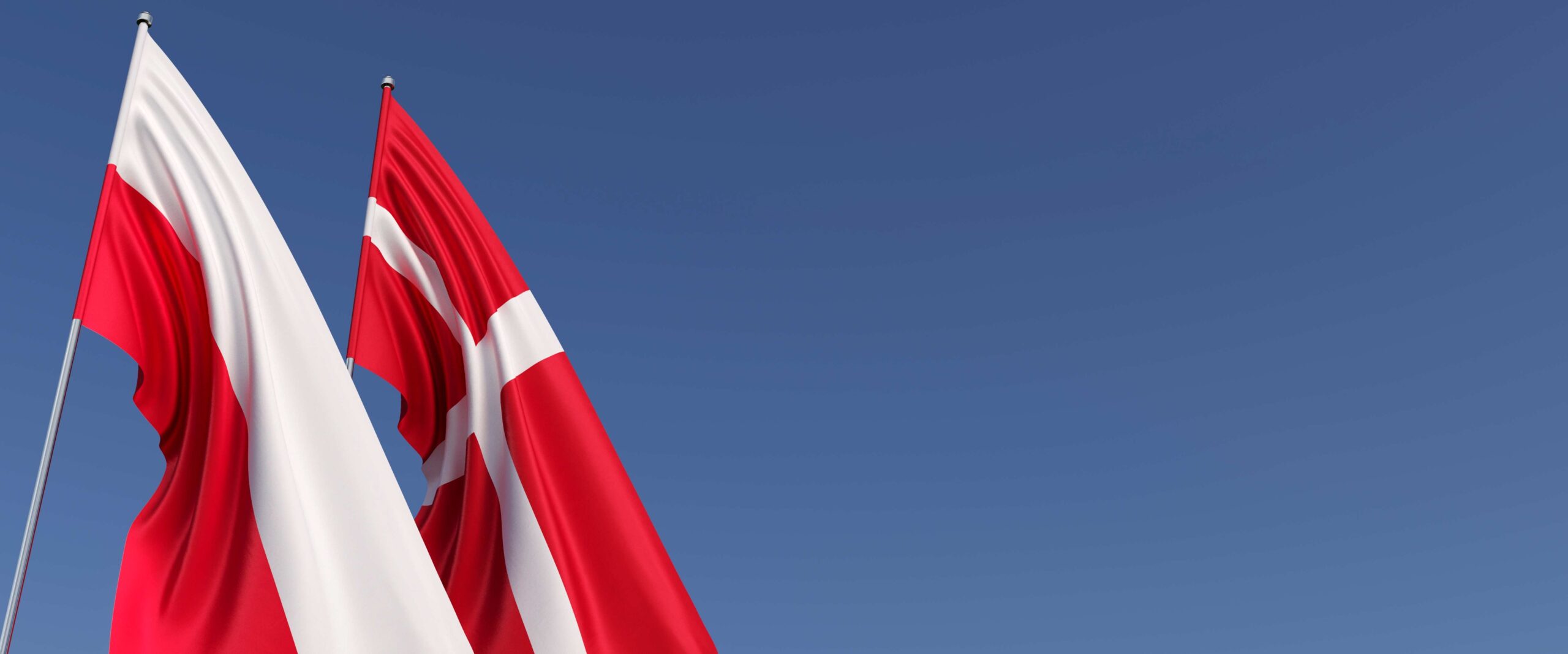
IT Nearshoring in Poland vs. Local Hiring in Denmark: A 2026 Cost & Quality Guide
For Danish CTOs and IT Managers, the challenge of 2026 remains consistent: how to scale technical teams rapidly without compromising on code quality or cultural alignment. While Copenhagen and Aarhus remain vibrant tech hubs, the domestic talent gap has pushed many companies to look across the Baltic Sea.
In this guide, we compare the realities of local hiring in Denmark versus leveraging nearshore it poland models to maintain a competitive edge. With over a decade of experience in cross-border talent solutions, the Polish IT sector has evolved from a simple cost-saving alternative into a strategic partnership ecosystem that Danish companies increasingly rely upon for mission-critical projects.
The Talent Gap: Denmark’s Digital Deficit
Denmark continues to lead Europe in digitalization, but this success comes with a price. According to recent reports on the Europe ICT Market, the demand for specialized roles in AI, Cloud, and Cybersecurity is outstripping local supply by nearly 20% annually.
The Danish education system, while excellent, produces approximately 5,000 new computer science graduates each year. Meanwhile, the market demand for software developers, DevOps engineers, data scientists, and cloud architects continues to grow at an unprecedented rate. Legacy industries such as finance, logistics, and energy are undergoing massive digital transformation initiatives, competing directly with tech startups for the same limited talent pool.
When local recruitment fails or becomes too slow, team augmentation services offer a strategic bypass, allowing Danish firms to tap into Poland’s pool of over 410,000 highly skilled software engineers. This figure represents not just quantity, but quality: Polish developers consistently rank among the top performers in global coding competitions, including HackerRank and TopCoder championships.
What makes nearshore in Poland particularly attractive is the educational infrastructure. Poland produces more than 20,000 IT graduates annually from prestigious technical universities such as Warsaw University of Technology, AGH University of Science and Technology in Kraków, and Wrocław University of Science and Technology. These institutions maintain strong industry partnerships and curriculum alignment with current market demands, ensuring that graduates enter the workforce with relevant, practical skills.
Cost Comparison: Beyond the Hourly Rate
It is no secret that Denmark is one of the most expensive countries for hiring developers. In 2026, a senior developer in Copenhagen can command a gross annual salary exceeding DKK 1,000,000, excluding social contributions and office overheads.
However, the true cost of local hiring extends far beyond base salaries. Danish employers must account for mandatory pension contributions (typically 12-17% of gross salary), holiday allowances, employer social security contributions, and increasingly expensive office space in prime locations like Copenhagen’s Ørestad or Aarhus’s innovation districts. When all factors are considered, the fully loaded cost of a senior developer in Denmark can easily exceed DKK 1.4 million annually.
| Metric | Denmark (Copenhagen) | Poland (Warsaw/Remote) |
| Senior Dev Salary (Annual) | DKK 950k – 1.15M | DKK 500k – 720k |
| Recruitment Lead Time | 3–5 months | 2–4 weeks |
| English Proficiency | Native-level | Top 15 Global (EF Index) |
By opting for nearshore in poland, Danish companies typically see a cost reduction of 30–50% on operational expenses. This allows for a larger team size within the same budget, accelerating the ‘time-to-market’ for critical features. Furthermore, the recruitment speed difference is substantial: while Danish firms struggle through lengthy notice periods and competitive bidding wars for local talent, nearshore poland providers maintain pre-vetted talent pools ready for immediate deployment.
The cost advantages extend to infrastructure as well. Office space in Warsaw costs approximately 40% less per square meter than comparable space in Copenhagen, while modern co-working spaces and technology parks throughout Poland offer world-class facilities at fraction of Nordic prices. This translates to lower overhead costs for companies establishing dedicated nearshore teams or development centers.
Why Nearshore IT Poland is the Best Fit for Denmark
Geography and culture play a massive role in successful software delivery. Unlike offshoring to distant time zones, nearshore poland offers several critical advantages that make it uniquely suited for Danish companies:
1. Zero Time Difference: Poland and Denmark share the same time zone (CET), ensuring seamless communication during standard business hours. Daily stand-ups at 9:00 AM Copenhagen time happen simultaneously with the development team in Warsaw. There’s no need for developers to work night shifts or for Danish project managers to schedule calls at inconvenient hours. This synchronous working environment dramatically improves collaboration quality and reduces the friction often associated with offshore partnerships.
2. Ease of Travel: Direct flights from Copenhagen (CPH) to Warsaw (WAW) or Gdańsk (GDN) take approximately 1 hour and 20 minutes. As noted by Skyscanner’s flight data, these frequent connections make face-to-face workshops remarkably accessible. Multiple airlines, including SAS, LOT Polish Airlines, and Norwegian, operate daily routes with competitive pricing. This geographic proximity means that Danish technical leads can visit their nearshore it poland teams for sprint planning sessions, architectural reviews, or team-building activities without the complexity and expense of intercontinental travel.
The travel ease extends beyond mere distance. Poland’s position within the European Union means no visa requirements for Danish business travelers, simplified customs procedures, and the ability to work freely across borders. This regulatory alignment eliminates bureaucratic hurdles that often complicate offshore relationships with non-EU countries.
3. Cultural Synergy: Both nations share a flat organizational structure and a ‘direct communication’ style, which is vital for Agile development. Polish professionals are accustomed to the Nordic work culture emphasizing work-life balance, transparency, and collaborative decision-making. Unlike some cultures where hierarchy might inhibit junior developers from challenging architectural decisions, Polish teams embrace the open dialogue essential for modern software development methodologies.
Moreover, Poland’s strong exposure to Scandinavian business practices through years of economic partnership means that Polish developers understand Danish corporate culture intuitively. They appreciate the importance of consensus-building, the value placed on punctuality and meeting deadlines, and the preference for pragmatic solutions over theoretical perfection. This cultural alignment reduces onboarding time and minimizes misunderstandings that can derail projects.
The technical culture alignment is equally important. Polish developers are well-versed in Agile methodologies, DevOps practices, and modern software development frameworks that Danish companies prioritize. Whether your team uses Scrum, Kanban, or SAFe, Polish nearshore teams integrate seamlessly into existing processes without requiring extensive methodology training.
Scaling with Flexibility: IT Augmentation
For many projects, a full nearshore center isn’t necessary. This is where it augmentation becomes the preferred model. It allows Danish companies to add 1, 2, or 5 developers to their existing in-house team almost instantly.
The beauty of team augmentation services lies in its flexibility and scalability. Unlike traditional hiring, which commits you to permanent headcount and long-term salary obligations, augmentation allows you to scale your team precisely according to project demands. When you’re launching a new product feature and need three additional frontend developers for a six-month sprint, it augmentation delivers exactly that—no more, no less.
This model proves particularly valuable for Danish companies experiencing seasonal fluctuations or pursuing project-based work. A fintech startup preparing for a major product launch can augment its team with specialized blockchain developers for the critical development phase, then scale back once the product reaches production. An e-commerce platform can bring in additional DevOps engineers before the holiday shopping season to ensure infrastructure stability during peak traffic periods.
Whether you need specialized React developers, seasoned Backend experts working with Node.js and PostgreSQL, or data engineers proficient in Apache Spark and Kafka, it augmentation provides the flexibility to scale down or up as project requirements evolve. The engagement model typically includes a short trial period, allowing Danish companies to validate technical fit and team chemistry before committing to longer-term collaboration.
Augmented team members integrate directly into your existing workflows, participating in daily standups, using your preferred project management tools (Jira, Azure DevOps, Linear), and contributing to your codebase through your established version control systems. They become genuine extensions of your in-house team rather than external contractors working in isolation.
Technical Expertise and Specialization
Poland’s IT sector has developed deep expertise across the full technology stack. The country hosts major development centers for global technology leaders including Google, Microsoft, IBM, and Intel, which has elevated the overall skill level of the Polish developer community. This enterprise exposure means that nearshore it poland professionals bring experience with enterprise-grade architectures, security practices, and scalability patterns that smaller markets might lack.
Specialized skills are readily available. Need machine learning engineers experienced with TensorFlow and PyTorch? Poland’s strong academic tradition in mathematics and computer science produces excellent AI specialists. Looking for cloud architects certified in AWS, Azure, or Google Cloud? The concentration of multinational cloud projects in Poland ensures abundant expertise. Searching for mobile developers proficient in Flutter, React Native, or native iOS/Android development? Polish development shops have delivered thousands of mobile applications for international markets.
Conclusion: Strategic Growth in 2026
Choosing nearshore it Poland is no longer just about cost-cutting; it’s about accessing a massive, high-quality talent pool that is just an hour away. For Danish businesses aiming to dominate the ICT market, Poland offers the most stable and scalable extension to their local capabilities.
The combination of geographic proximity, cultural alignment, cost efficiency, and technical excellence makes nearshore Poland the optimal choice for Danish companies seeking to scale their technical capabilities in 2026 and beyond. Whether through dedicated team augmentation services or comprehensive it augmentation strategies, the Polish nearshore model delivers the perfect balance of quality, speed, and value that modern Danish businesses require to remain competitive in an increasingly digital economy.
Want to explore how IT nearshoring to Poland can benefit your business? Contact us for a personalized cost analysis and discover your potential savings.
Contact our team at Itelence to discuss how our IT nearshoring Poland services can help your business achieve 30-50% cost savings while maintaining top-quality software development. With extensive experience building high-performing Polish development teams across diverse technologies and domains, we can guide you through each step of the nearshoring journey.
For more information about our specific capabilities, visit our IT Nearshoring Poland Services and Software Development & Maintenance pages. You can also explore our related services including IT Staff Augmentation Poland and Extended IT Project Team to find the exact delivery model that best fits your needs.
Related Resources:
- The Complete Guide to Software Development Poland: Benefits, Process & Success Strategies
- Why Poland Leads Europe’s IT Nearshoring Market in 2025: Talent, Technology & Value
- IT Nearshoring and IT Offshoring: Choosing the Right Global IT Strategy for Your Business
- Building Dedicated Development Teams in Poland: The Complete Strategic Guide for 2025
External Resources:
- Poland: Staff Concluding Statement of the 2024 Article IV Mission – IMF
- Gartner’s 2026 IT Spending Forecast – Insights into European tech growth.
- Skyscanner Flight Info – Data on CPH-WAW connectivity.
- Mordor Intelligence ICT Report – Market trends for 2026.